Advisors
Ecology

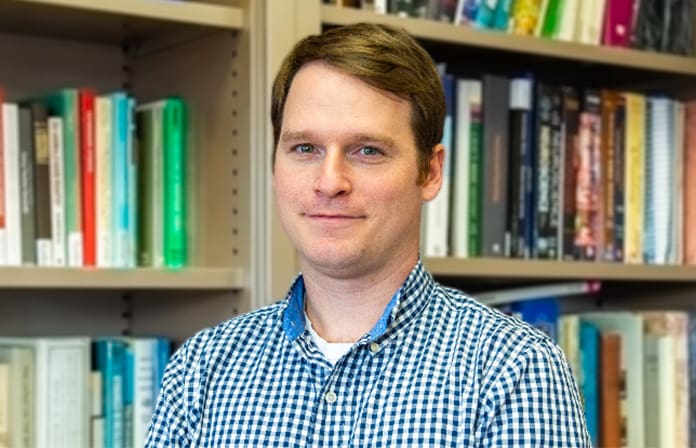
Michelle Anderson, Ph.D.
Advising Area of Expertise: Ecology – all degree Options (specific expertise in fisheries, aquatic ecology, entomology, conservation, fish & game warden/conservation officer careers)
Advising Bio:
I enjoy being an advisor and helping students. While my primary job as an advisor is to assist students in making academic plans and registering for classes, I also frequently help students: 1) find answers to questions about science careers, 2) participate in campus club events, study abroad, volunteer opportunities, and conferences, 3) engage in professional networking opportunities, 4) complete applications for graduate schools, academy trainings, and professional certification programs, 5) edit job and internship cover letters and resumes, 6) practice presentations and mock interviews, and 7) by writing letters of recommendation (as long as I am asked weeks or months in advance of application due dates)!
I am happy to meet with students for advising appointments face-to-face in my office or on Teams/Zoom. Appointments are typically 30 minutes, but shorter or longer meetings are available as needed. We can occasionally work through email, but face-to-face or Zoom is usually faster and more efficient. I post available 30-minute appointment times each block through my email Bookings page.
Biology

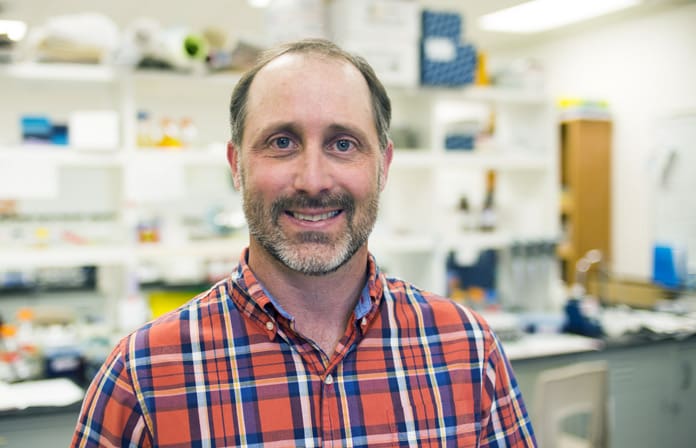
Michael Gilbert, Ph.D.
I am a biochemist with an interest in the field of parasitology/vector biology. I earned a Bachelors of Science degree in Biological sciences and a minor in chemistry from California State University, Chico where I conducted research on parasitic helminthes and the protozoan parasite Trypanosoma cruzi. I went on to get my Ph.D. at The University of Montana, Missoula where my dissertation research and one year of postdoctoral experience focused on Myxobolus cerebralis, the myxozoan parasite responsible for whirling disease in salmonid fish. I then did a postdoctoral fellowship at the University of California, San Diego where I studied Giardia lamblia, a human intestinal parasite. While at UCSD, I was involved in the functional annotation of the Giardia genome and an active participant in the G. lamblia transcriptome project using serial analysis of gene expression (SAGE). I then returned to The University of Montana, Missoula where I began research on Borrelia burgdorferi, the causative agent of Lyme disease, which is the most common arthropod-borne disease in the United States and Europe. Shortly before coming to UMW in 2007, I developed the first inducible promoter system available for use in B. burgdorferi, which allowed researchers to artificially regulate gene expression in this pathogenic spirochete. I am currently working to optimize this system in order to regulate B. burgdorferi genes, in vivo, in an experimental tick-mouse infectious cycle. I teach introductory biology classes and general chemistry, as well as biochemistry, genetics and parasitology.
Biology
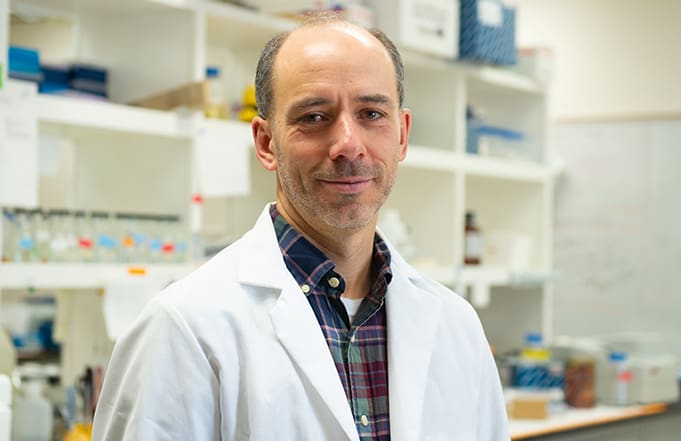
Michael Morrow, Ph.D.
Dr. Michael Morrow obtained his Ph.D. in Cellular, Molecular and Developmental Biology from the University of Pittsburgh (2001) where he studied protein secretion in the yeast Saccharomyces cerevisiae. At Montana Western, Dr. Morrow and his undergraduate student researchers are studying some of the proteins that play roles in the early secretory pathway of the pathogenic yeast Candida albicans. Since protein secretion is important for this organism to cause infection, a better understanding of the machinery involved in protein secretion could lead to the identification of future drug targets to prevent and treat Candida infections. In addition to this research focus, Dr. Morrow is also interested in applied microbiology projects including a new project that is investigating the prevalence of antibiotic resistance genes in E. coli strains isolated from local streams and rivers in an effort to determine if wild E. coli populations could act as a reservoir for antibiotic resistance in bacterial populations. Dr. Morrow regularly teaches Discover Biology (BIOB101), Principles of Living Systems (BIOB160), Cellular and Molecular Biology (BIOB260), General Microbiology (BIOM260) and Advanced Cellular and Molecular Biology (BIOB425). Using Montana Western’s unique block scheduling allows Dr. Morrow to utilize many block-long research projects in his classes to provide students with hands on practical experience with many modern cell/molecular and microbiological techniques. Outside of school, Dr. Morrow enjoys backpacking, hiking, hunting and ice hockey (Let’s Go Pens!).
Ecology
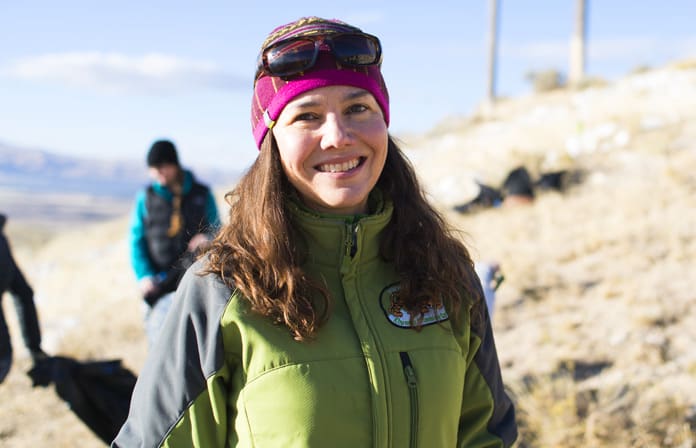
Wendy Ridenour, Ph.D.
Wendy Ridenour is an ecologist and Professor of Biology at The University of Montana Western, where she has taught experiential classes full time since 2009. Her current research focuses on whole community dynamics in alpine systems, including plant-plant and plant-herbivore interactions and how alpine communities respond to anthropogenic climate change. Her post-doctoral research in Chile and New Zealand also concentrated on alpine community dynamics. She received her PhD from the University of Montana Missoula in 2006 in Organismal Biology and Ecology.
Ridenour’s dissertation research focused on the question: why do some exotic plant species attain very high densities and dominance in communities to which they are alien but occur at very low densities in their native communities? “Invaders” such as these can be very destructive to native ecosystems and cause extensive economic impacts. Her research on the aggressive North American invader from Europe, spotted knapweed, Centaurea maculosa (C. stoebe) explored the hypothesis that some exotic invasive plants may transform from rare components of their native communities to competitive dominants because of their novel biochemistry (known as the “novel weapons” hypothesis; Callaway and Ridenour 2004). She discovered that these strong biogeographical differences in C. maculosa’s impacts in its native and non-native ranges is largely due to the fact that naïve native North American species of plant competitors and generalist herbivores are more susceptible to the chemical effects of this invader than species native to C. maculosa’s native range. C. maculosa shows evidence of being more competitive and allelopathic to North American native species than species in the native ranges of this invader, and C. maculosa plants in their invasive North American range are much better defended against generalist insect herbivores. Her 2004 publication Novel weapons: invasive success and the evolution of increased competitive ability is one of the 100 most notable papers of the past 100 years, having made a significant impact on the field of ecology (Ecological Society of America).
A portion of Professor Ridenour’s dissertation research also focused on experiential science education, and she currently enjoys teaching field and laboratory based Experience One courses in Alpine Ecology, Botany, Coral Reef Ecology, Introductory Biology courses for majors and non-majors (BIOB 101, 160 & 170) and Plant Systematics as well as conducting research with student interns.