Talk of the Town: Fick Faculty Speaker Series Featuring Dr. John R. Henris
September 28, 2026
The University of Montana Western is pleased to announce the first event of this year’s Talk of the Town Faculty Speaker Series, which celebrates faculty innovation in teaching, research, and scholarship. Dr. John R. Henris will present “Fisheries and Progressive Era Conservation in Dillon and Southwest Montana, 1898–1920” on Tuesday, November 4, from 5:30–7:30 p.m. at Angler Village, located at 335 S. Atlantic Street in Dillon.
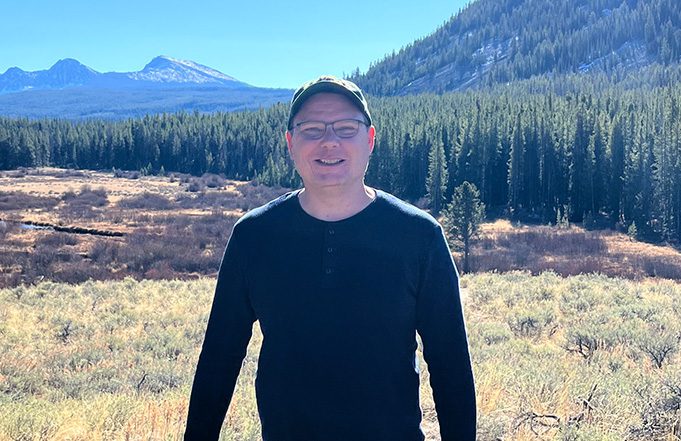
Each semester, one faculty member is recognized with an honorific title and award and shares their work through a public presentation in Dillon. The series highlights the many ways UMW faculty enrich student learning and the broader community while celebrating excellence and strengthening the connection between the University and the Dillon community.
Henris’s presentation will focus on the seasonal summer “fish trains” operated by the Oregon Short Line (Union Pacific) between Butte and Dillon, and sometimes Armstead, from 1898 to 1920. More broadly, he will explore how Dillon and Beaverhead County residents actively participated in the development of recreational fisheries in Montana during the Progressive Era.
The presentation will also examine how local residents developed their own perspectives on emerging conservation policies in the Intermountain West. At times, those perspectives complemented the interests of neighboring Butte and the Anaconda Mining Company, while at other times they differed considerably.
At Montana Western, Henris researches and teaches courses in the history of the U.S. West, environmental history, and public history. He sees the presentation as an opportunity to demonstrate the value of connecting local history to broader regional and national events.
“Public History is where I think this talk most overlaps with my work as a faculty member at UMW, as I want my students to build similar connections in their own communities,” said Henris. “Most of my students will work as teachers, and I want them to see the value in using local history as a way to garner interest and convey the significance of larger regional and national historical trends with their own students one day.”
That approach is also reflected in Henris’s classroom. During Block 1 of the fall semester, students in his History of Fly-Fishing course worked collectively on a presentation examining fisheries development in the Birch Creek watershed from 1880 to 1940.
“Birch Creek holds significance for both UMW and the Dillon community,” Henris said. “Their presentation elucidated how local communities in Beaverhead County negotiated historical fisheries development against ongoing conflicts with water rights, irrigation, forest grazing, precious metal mining, and New Deal legislation, which reflected larger national discussions across the Intermountain West during the same period.”
Henris hopes students carry the research practices developed through projects like this into their future classrooms and communities. He also hopes the public will see local history as more than a record of events that happened in the past.
“I hope both students and the community take away the sense that all history is local and that people in places like Dillon historically made decisions and helped shape policy with very real regional and national implications,” Henris said. “I hope they see that local communities are, in fact, proactive participants in the creation of historical policy and narratives, rather than having these things forced upon them by outside forces beyond their ability to shape or engage with.”
For Henris, being selected as a Fick Faculty Speaker provides an opportunity to bring that work directly to the community.
“For me, it is a great opportunity to make connections with the local Dillon community and to present work on historical topics that I am both genuinely interested in and that I think will appeal to the public as well,” Henris said.
The Fick Faculty Speaker Series is more than an honor — it is a bridge between campus and community. By recognizing faculty contributions, the series fosters a culture of collaboration, demonstrates UMW’s commitment to student success, and upholds the core values upon which our institution was founded.
This event is free and open to the public. We hope you will join us in celebrating and connecting UMW faculty with the community.