Montana Western Professor Publishes New Book Exploring Montana’s Geological History
June 1, 2026
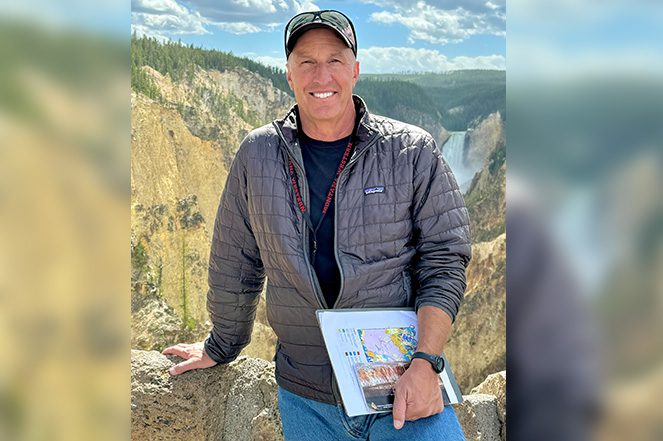
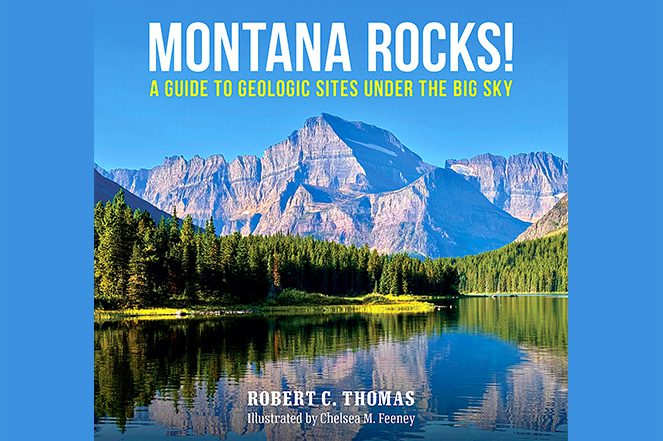
The University of Montana Western is proud to celebrate a new publication from geology professor Robert C. Thomas. His book, "Montana Rocks! A Guide to Geological Sites Under the Big Sky", sets out to walk readers through Montana’s geologic past by way of 60 standout locations across the state.
Released by the Geological Society of America, Montana Rocks! can be purchased through the GSA, Mountain Press Publishing in Missoula, and independent bookstores around Montana. It will be available through national booksellers soon.
Thomas started assembling the book after finishing the second edition of Roadside Geology of Montana with his co-author, Don Hyndman. Years of fieldwork and time on the road had already stacked up, but he wanted to put together something that went beyond a list of interesting places.
“I wanted to tell the geological story of Montana, our deep-time history, billions of years in the making and told through the most spectacular places to see it,” Thomas said.
Instead of arranging sites by region the way many guidebooks do, Montana Rocks! follows a timeline. The chapters move readers through nearly four billion years, from the oldest rocks tied to the continent’s early formation all the way to much more recent moments, including how people have interacted with the landscape. While the subject matter can get technical, Thomas wrote with non-specialists in mind.
“This book tells the geologic story of Montana over the last 4 billion years in language accessible to the non-geologist,” he said. “With this book, a person can learn the geologic history of Montana without leaving home, but better to use it as a guide and travel the state, immersing in the deep-time story.”
Putting it together meant repeated trips across Montana over about five years. Thomas combined a heavy reading load with field notes, photos, and plenty of mileage, heading to places as far apart as Yaak in the northwest and Alzada in the southeast.
“Doing geology is physically and mentally challenging,” he said. “Getting into the field involves long drives on bad roads, and commonly in stormy weather.”
The work came with its share of stories. Thomas remembers being chased by a tornado between Fort Smith and Hardin. He also spent many nights sleeping in the back of his 4-Runner, either waiting for the right photo or returning to a site to catch better light.
Even with the travel he had already done for Roadside Geology of Montana, this project still surprised him.
“Without question, I learned much more than I expected about Montana geology,” he said. “Like all good science, gathering more information improved my understanding and allowed me to better explain what I had learned to others.”
Two places, in particular, stayed with him: Big Horn Canyon and the Pryor Mountains. The approach into Big Horn Canyon from Lovell, Wyoming stood out the most.
“The southern entrance to the Big Horn Canyon from Lovell, Wyoming was a new adventure and probably the most inspiring place I visited,” Thomas said. “It’s the Grand Canyon of Montana. I had no idea.”
Still, he views the locations as pieces of something bigger than any single viewpoint or trailhead.
“The goal is to help people understand that the Earth has a deep-time history, and that they can understand it with a basic understanding of how the Earth works,” he said.
That idea also sits at the center of his long career at Montana Western, where he has pushed for hands-on, field-based learning. Early on, he made a point of getting students outside, letting the landscape do some of the teaching, a natural fit with the university’s immersive learning model.
“My goal is to educate humanity about the Earth and how it works, regardless of the venue,” Thomas said.
He hopes readers, students, and anyone who spends time outdoors finishes the book with more respect for the planet’s long record and the processes that keep remaking it.
“I want people to be inspired by the fact that humanity is a newcomer to this planet, and that 4 billion years of history precede them and their issues,” he said.
Thomas will talk about the book and Montana’s geologic story during a public presentation, Montana Rocks!, scheduled for June 25 at the Patagonia Outlet in Dillon, MT. The talk will trace the deep-time record visible in the state’s landscapes and the forces that formed them.
After 35 years as a professor, Thomas plans to retire after the coming academic year. Even so, he expects to keep teaching in other ways, including educational travel. An educational trip already on the calendar is a “Geology of Greece” course offered through the University of Montana’s Osher Lifelong Learning Institute, and he is also weighing future writing projects, like Yellowstone Country Rocks!.
To purchase a copy, visit The Geological Society of America. Those interested in purchasing a signed copy can contact Debbie Sporich at The Bookstore in Dillon, Montana, at 406-683-6807.
For more information, please contact Dr. Rob Thomas at [email protected].