Montana Western Partners with Beaverhead EMS to Offer EMT Course for College Credit
November 6, 2026
For the first time, University of Montana Western students have the opportunity to earn college credit while completing Emergency Medical Technician (EMT) training through a partnership between Montana Western, Beaverhead Emergency Medical Services and the university's School of Outreach.
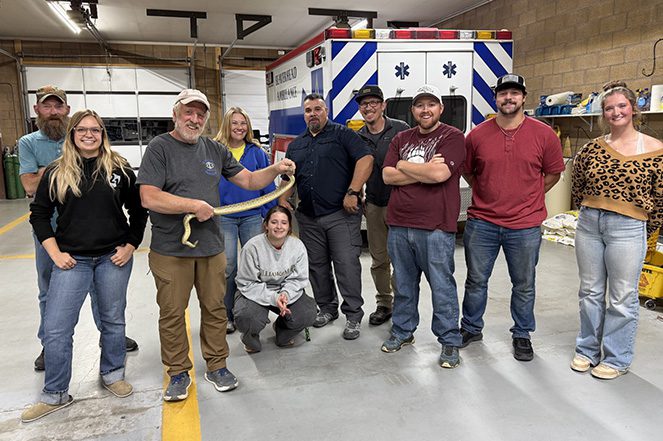
The course, ECP 131 Emergency Medical Technician with Clinical, began Aug. 26 and runs through Dec. 9. The class includes eight participants, including four Montana Western students and community members. Three UMW students are enrolled for college credit, while another is participating without credit.
The opportunity is the result of two years of collaboration between Montana Western’s Health and Human Performance (HHP) department, the School of Outreach and Beaverhead EMS.
Janelle Handlos, HHP faculty member and lead on the university’s involvement, said the idea grew out of previous experiences with UMW students completing EMT training through Beaverhead EMS. While the training provided valuable experience for students pursuing healthcare careers, the time commitment and cost could be barriers.
After a student expressed interest in completing EMT training as part of his preparation for graduate study in athletic training, Handlos began exploring the possibility of offering the course for college credit.
“Since we had time to plan, we decided the EMT course could be his capstone experience in Kinesiology,” Handlos said.
Working with Ryann Gibson in the School of Outreach and Beaverhead EMS, the group coordinated scheduling, course fees, credit approval and student recruitment to make the first offering possible.
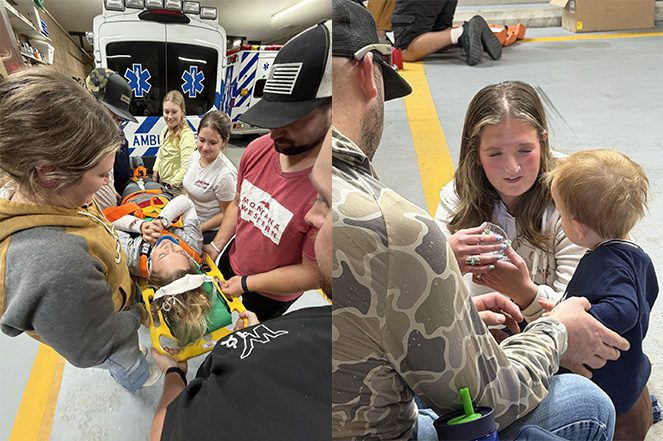
The course emphasizes hands-on learning and real-world experience, with students participating in classroom instruction, skills practice and scenario-based training. Activities have included a multi-vehicle mock accident, pediatric training with live patients, interactions with geriatric patients at local assisted living facilities and envenomation training involving live rattlesnakes.
Students also have opportunities to work alongside local emergency response agencies, including the Dillon Volunteer Fire Department, Dillon City Police Department and Beaverhead County Sheriff’s Office. Additional training has included extrication exercises and helicopter landing zone instruction with Life Flight Network.
Brenda Kirkley, EMT Lead Instructor for Beaverhead EMS, said the community’s involvement has played an important role in providing students with realistic training opportunities.
“The bond that the group has established is profound,” Kirkley said. “They work well as individuals and function smoothly as a team.”
Kirkley emphasized the importance of hands-on experiences in preparing students for emergency medical work, including clinical experiences in hospital emergency rooms and ambulance ride-alongs.
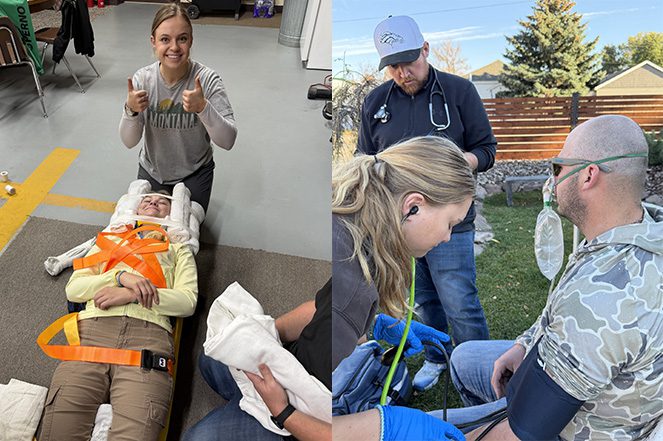
Throughout the course, students will complete 120 hours of classroom instruction and hands-on training, along with required clinical experiences in emergency room and prehospital settings.
Upon successfully completing the course, students will have the knowledge and preparation needed to take the National Registry of Emergency Medical Technicians (NREMT) exam. Those who pass the exam may then apply for their Montana EMT license.
In addition to lifesaving skills, Handlos said students are gaining experience in interprofessional collaboration, healthcare ethics, communication and service to others.
Students from several academic programs, including Kinesiology, Biology, Natural Horsemanship and Psychology, have participated in the course.
“The education these students receive will have a wide-reaching impact as they are all preparing to leave Montana Western shortly to put their degrees and this EMT certification to work in communities across the state,” Handlos said.
Kirkley noted that the need for trained emergency medical personnel continues at the local, state and national levels. She hopes opportunities like this will help prepare the next generation of emergency responders.
“There is always a need for prehospital care providers on the local, state and national levels,” Kirkley said. “Having dedicated first responders, whether paid or volunteer, is a niche that will always need replenishment.”
With the first semester underway, Montana Western hopes to continue building on the partnership and provide students with additional opportunities to pursue EMT training while earning college credit.